
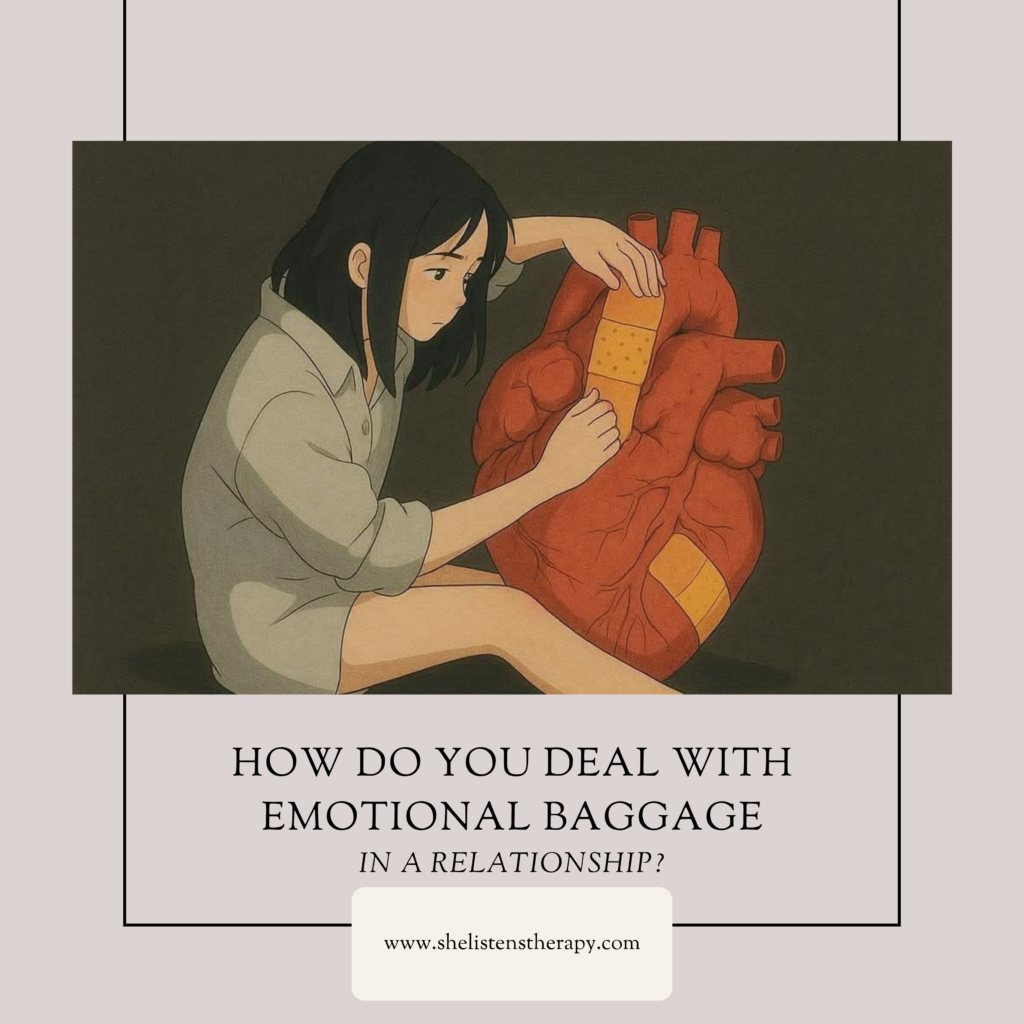
Many relationships struggle not because of what is happening in the present, but because of wounds carried from the past. Someone who was betrayed before may struggle to trust again. Someone who grew up feeling ignored may fear abandonment. These experiences do not simply disappear when a new relationship begins.
Emotional baggage is the invisible weight people bring into love. Learning how to handle it with care can make the difference between a relationship that grows and one that slowly breaks under pressure.
1. Acknowledge that emotional baggage exists
The first step is honesty. Many people try to pretend their past has no effect on them. They push pain aside and hope it will disappear on its own. But unacknowledged wounds often show up in unexpected ways, such as jealousy, withdrawal, overthinking, or fear of intimacy.
Acknowledging emotional baggage does not mean blaming yourself or your partner. It simply means recognizing that past experiences may still influence present emotions.
2. Understand where the pain comes from
Emotional baggage often has a story behind it. It may come from childhood experiences, previous relationships, betrayal, rejection, or long periods of emotional neglect. When couples take time to understand these stories, compassion grows.
Instead of seeing your partner’s reactions as overdramatic or unreasonable, you begin to see the deeper pain that shaped those reactions.
3. Create a safe space for honest conversations
Healing rarely happens in silence. When partners feel safe enough to share their fears, insecurities, and past experiences, it strengthens emotional connection.
These conversations are not about fixing each other immediately. They are about listening with patience and understanding. Sometimes the greatest gift you can give your partner is simply allowing them to feel heard.
4. Separate the past from the present
One of the hardest parts of emotional baggage is learning not to punish the present for what happened in the past. A partner who was not responsible for previous pain should not constantly carry the weight of it.
This does not mean ignoring past wounds. It means being mindful of when those wounds are influencing current reactions.
5. Take personal responsibility for healing
While a supportive partner can help, emotional healing is still a personal journey. Each individual must be willing to reflect, grow, and work through their own pain.
Sometimes this involves self reflection, personal development, or professional guidance. True healing happens when someone chooses growth instead of remaining stuck in old patterns.
6. Practice patience and compassion with each other
Healing emotional baggage does not happen overnight. There will be moments of progress and moments of difficulty. What matters most is how couples respond during those moments.
Patience, empathy, and reassurance allow both partners to feel safe while navigating their emotional history together.
Final thoughts
Emotional baggage does not automatically destroy a relationship. In fact, when handled with honesty, compassion, and growth, it can deepen understanding between partners.
The goal is not to erase the past. The goal is to make sure the past no longer controls the future. When couples choose understanding instead of judgment, emotional baggage becomes something they work through together rather than something that keeps them apart.