
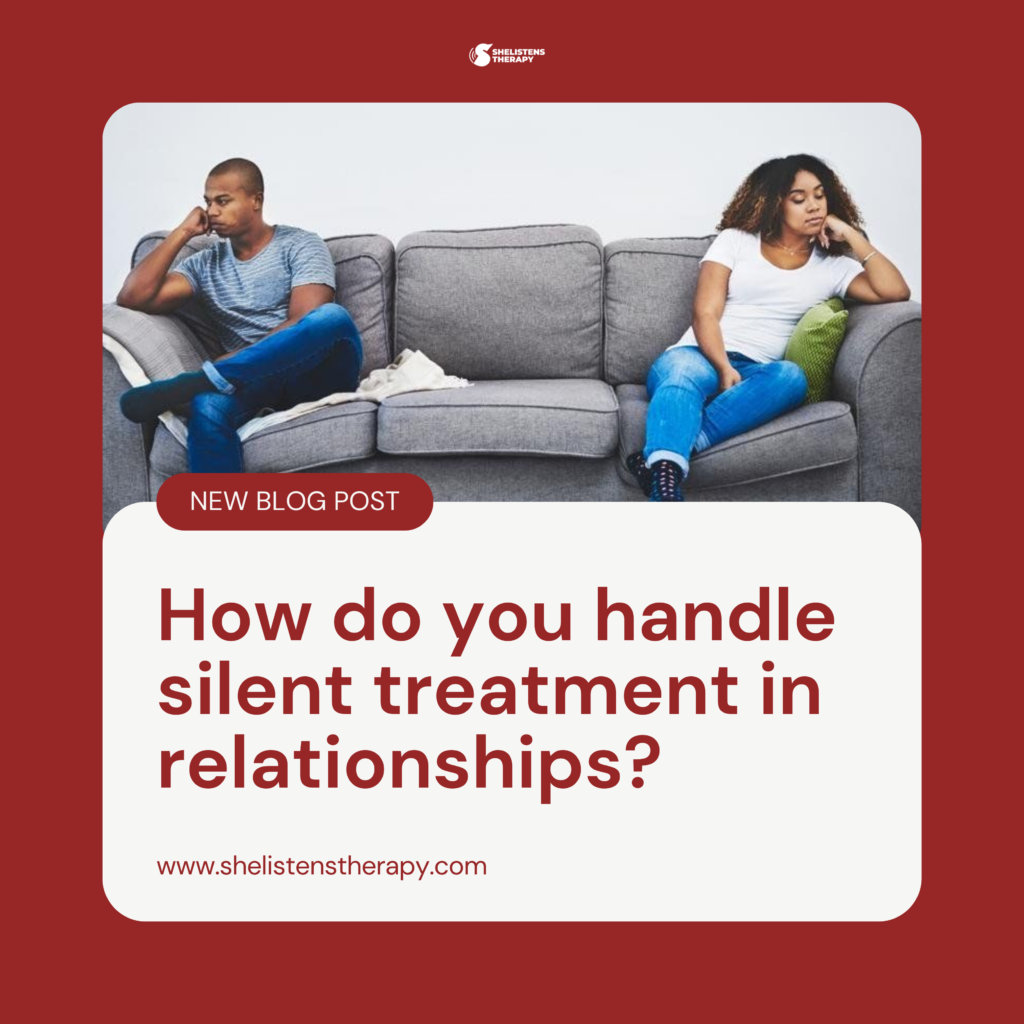
You said something. Or maybe you did not say enough. And now the person you love has gone completely quiet.
No response to your messages. One-word answers if you are lucky. A coldness in the room that you can feel even when they are sitting right next to you. You keep replaying the conversation trying to figure out what happened. You apologise even when you are not sure what you are apologising for. You do anything to make the silence stop.
If you have been here, you know how disorienting it is. How it can make you feel desperate, invisible, and somehow both guilty and angry at the same time.
Silent treatment is one of the most common and least talked about forms of emotional pain in relationships. And it is more complicated than most people realise, because sometimes it is a genuine need for space, and sometimes it is something much more damaging than that.
Here are six honest things you need to understand about silent treatment and how to handle it.
1. There is a difference between needing space and punishing someone with silence
This distinction matters more than almost anything else in this conversation.
Needing space after a conflict is healthy and human. Some people cannot process their emotions in real time. They need to step back, gather their thoughts, and return to the conversation when they are able to do so without saying things they will regret. That is not silent treatment. That is self-regulation.
Silent treatment is different. It is deliberate withdrawal used as a tool to punish, control, or communicate displeasure without words. It says “I am not going to engage with you until you have suffered enough to satisfy me.” It gives the other person no information, no timeline, and no way to resolve anything.
One is a boundary. The other is a weapon.
If your partner needs space, they should be able to say “I need some time to process this and I will come back to talk.” If they disappear into silence with no explanation and no return in sight, that is a different thing entirely.
2. Silent treatment works because it targets your deepest fear
Nobody uses silent treatment by accident. It works because it taps into one of the most primal human fears, the fear of being cut off from someone you love.
When someone you are emotionally attached to suddenly withdraws their presence, warmth, and communication, your nervous system reads it as a threat. Not just an inconvenience. A threat. You panic. You chase. You over-apologise. You shrink yourself trying to restore the connection.
And that is exactly what the silent treatment is designed to do.
Understanding this does not mean you stop feeling it. But it does mean you can start to respond to it more consciously instead of just reacting from fear. When you know what is happening underneath your panic, you can make clearer decisions about how to handle it.
3. Do not chase the silence with desperation
This is one of the hardest things to do in practice but one of the most important.
When someone goes silent, the instinct is to pursue. To keep sending messages. To apologise repeatedly. To make yourself smaller and smaller in the hope that it will bring them back. And sometimes it works in the short term, which is why both people keep repeating the pattern.
But what you are actually doing when you chase silence with desperation is teaching your partner that this behaviour gets results. That if they shut down long enough, you will eventually give them whatever they want just to end the discomfort.
That is not resolution. That is surrender. And it will happen again.
Instead, communicate once. Clearly and calmly. Say what you want to address and that you are ready to talk when they are. Then give them the space to come back. Not because you are being cold, but because you are refusing to reward a pattern that is hurting you both.
4. When they come back, the real conversation still needs to happen
One of the biggest mistakes couples make is treating the end of the silent treatment as the end of the problem. The silence breaks, things feel warm again, and everyone quietly agrees to move on without addressing what happened.
Until the next time.
When your partner returns from silence, that is not the moment to pretend everything is fine. It is the moment to have the conversation that the silence interrupted. Gently but clearly.
Not “why did you do that to me” as an accusation. But “I want us to talk about what happened and I also want to talk about how we handle conflict because the silence is really hard for me.”
You are allowed to name the impact. You are allowed to say that being shut out hurts you. That is not an attack. It is honesty. And a relationship that cannot hold that honesty is a relationship that will keep cycling through the same patterns.
5. Look honestly at your own role in the dynamic
This point is uncomfortable but necessary.
Sometimes silent treatment becomes a pattern in a relationship because both people have unspoken agreements that keep it alive. One person shuts down. The other chases. The issue never gets resolved. And the cycle repeats because neither person has been willing to change their part of it.
Ask yourself honestly. Do you create an environment where your partner feels safe to express negative emotions? When they have tried to speak in the past, have they been heard, or have things escalated in a way that made silence feel safer than words?
This does not excuse the silent treatment. It is never the right tool. But understanding what is fuelling it in your specific relationship is important if you want to actually change the pattern rather than just survive it each time it happens.
Sometimes people go silent because they genuinely do not know how to say what they feel. That is worth addressing with compassion, even while holding the boundary that silence is not acceptable as a long-term response.
6. Repeated silent treatment is an emotional safety issue and it needs to be addressed directly
If silent treatment is a regular pattern in your relationship, not an occasional need for space but a consistent response to conflict, that is something that needs to be taken seriously.
Prolonged and repeated withdrawal of communication is a form of emotional manipulation. Over time it erodes your sense of self. You start walking on eggshells, constantly monitoring your words and behaviour to avoid triggering the silence. You become anxious, hypervigilant, and disconnected from your own needs because you are too busy managing theirs.
That is not a relationship. That is survival.
If this is your reality, the conversation you need to have is not just about the last argument. It is about the pattern. About what both of you need. About whether you can build something different together, with support if necessary, or whether the relationship is slowly making you smaller than you deserve to be.
You deserve to be in a relationship where conflict leads to conversation, not disappearance.
Final thoughts
Silent treatment feels like nothing is happening. But something is always happening inside the silence. Feelings are building. Distance is growing. And the longer it goes unaddressed, the harder it becomes to find your way back to each other.
If you are the one being shut out, you are not imagining the pain of it. It is real and it matters.
If you are the one going silent, this is an invitation to ask yourself an honest question. What are you trying to say that you have not found the words for yet? Because there is always something underneath the silence. And the relationship deserves to hear it out loud.
The goal is not just to end the silence. The goal is to build something safe enough that silence is never needed as a weapon in the first place.