
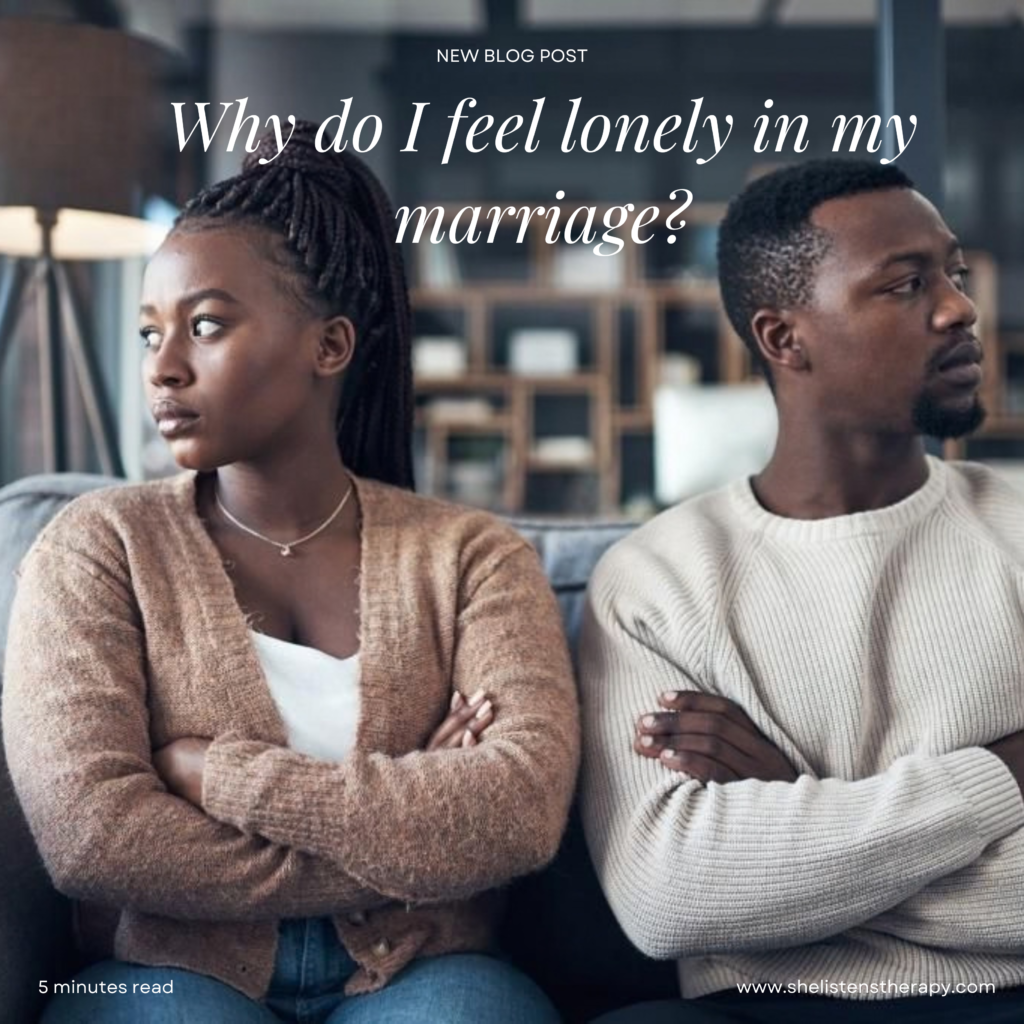
You are not single. You share a bed, a home, a last name, possibly children, and a life with another person. And yet, in the quiet moments, something inside you aches with a loneliness that you cannot fully explain.
You feel guilty for feeling it. Because from the outside, everything looks fine. However, on the inside, you feel invisible. Unheard. Like you are living alongside someone rather than truly with them.
Loneliness in marriage is one of the most painful and least talked about experiences a person can have. Because it carries a specific kind of shame. At least when you are single and lonely, it makes sense to people. But lonely inside a marriage? That is harder to admit. Harder to explain. And often, much harder to fix.
But it is more common than you think. And it is worth understanding.
Here are six reasons why loneliness shows up in marriage, and what each one is really asking of you.
1. You stopped being friends and became roommates
At the beginning, you talked about everything. You were curious about each other. You laughed easily, shared opinions, stayed up late just to keep the conversation going.
Somewhere along the way, life took over. Responsibilities multiplied. Conversations narrowed down to logistics. Who is picking up the children. What is for dinner. Did you pay that bill.
Functional conversations are necessary. However, they are not connection. And when the only communication happening in a marriage is task-based, two people can live side by side for years without ever truly meeting each other.
Loneliness in this case is not a sign that love is gone. It is a sign that friendship has been neglected. Because beneath every strong marriage is a genuine friendship, and that friendship requires attention to stay alive.
2. You are not being emotionally seen
There is a difference between being heard and being seen. Your partner may listen to your words. However, if they consistently miss what you are actually feeling underneath those words, you will still feel alone.
Emotional loneliness happens when you cannot bring your full self into the relationship. When you edit yourself before you speak because you already know how they will respond. When you share something vulnerable and they change the subject or offer a solution instead of simply sitting with you in it.
Over time, you stop sharing. Not because you do not want to connect but because the experience of not being met has taught you that it is safer to carry things alone.
Furthermore, the more you carry alone, the lonelier you become. And the lonelier you become, the harder it is to reach for connection even when it is available.
Being emotionally seen is not a luxury in marriage. It is one of the most fundamental human needs. When it is missing, the loneliness that follows is profound.
3. Major life changes created distance neither of you addressed
Loneliness in marriage often follows a significant life event. A new baby. A job loss. A bereavement. A move to a new city. A health crisis. A career shift.
These transitions change people. They change priorities, energy levels, emotional availability, and sometimes identity. However, couples rarely stop to check in with each other about how those changes are affecting them individually and together.
Instead, each person adapts privately. One person becomes more withdrawn. The other becomes more focused on work or the children. Without realising it, they have drifted apart in the middle of a season that actually required them to draw closer.
In many cases, loneliness in marriage is not the result of falling out of love. It is the result of two people going through something hard without turning toward each other in the process. Because that turning toward each other has to be intentional. It does not happen automatically, especially under pressure.
4. Unresolved conflict has built a wall between you
When an argument does not get properly resolved, it does not disappear. It settles. It becomes a layer of distance that sits between two people, invisible but very present.
Over months and years, unresolved conflicts stack. Each one adds another brick to a wall that nobody formally decided to build but both people can feel. Conversations become careful. Touch becomes less frequent. The warmth that used to come naturally now has to fight its way through layers of accumulated hurt.
Because neither person addresses what is underneath, both people start to feel alone in the marriage. One feels misunderstood. The other feels unappreciated. Both feel like the person they married has somehow become a stranger.
Loneliness in this situation is grief. It is the grief of watching closeness disappear in slow motion and not knowing how to get it back.
5. Your emotional needs have changed and you have not communicated them
The person you were when you got married is not exactly the person you are today. You have grown, changed, been shaped by experience. Consequently, what you need emotionally has likely shifted too.
Perhaps you needed more independence at the start and now you need more closeness. Perhaps your love language has evolved. Perhaps you have gone through something that made emotional safety more important to you than it used to be.
However, if your partner is still relating to the version of you from five years ago, there will be a gap. They are not intentionally failing you. They simply do not know who you have become because that conversation has not happened.
Loneliness in marriage is sometimes the result of two people who have grown without growing each other in. The solution is not to grow less. It is to bring your partner along by sharing who you are becoming and asking who they are becoming in return.
6. You are waiting for them to notice instead of saying what you need
This is the point that requires the most honesty. Because so much loneliness in marriage is sustained by silence.
You feel disconnected but you have not said it directly. You are craving more quality time but you are dropping hints rather than making a clear request. You want more emotional intimacy but you are waiting for your partner to figure it out without being told.
Part of this comes from pride. Part comes from fear. Part comes from the belief that if they truly loved you, they would already know.
However, even the most loving and attentive partner cannot consistently meet needs they do not know exist. Vulnerability is required. Saying “I have been feeling disconnected and I miss us” is a complete sentence. It is also one of the bravest things you can say to someone you love.
In fact, that one sentence, said with honesty and without blame, has the power to open a conversation that shifts everything.
Final thoughts
Feeling lonely in your marriage does not mean your marriage is over. In many cases, it means something important is asking to be addressed. A conversation that needs to happen. A need that has gone unspoken. A distance that both of you have felt but neither has named out loud.
Loneliness inside a marriage is painful precisely because the potential for connection is right there. The person who could meet your need is in the next room. And yet something keeps the gap in place.
That something can be worked through. With honesty, with courage, and often with the support of a professional who can help you both find your way back to each other.
At Shelistens Therapy and Consulting, we work with couples who are not in crisis but who know something is missing. If you recognise yourself in this post, that recognition is the beginning. Visit shelistenstherapy.com or send a message on WhatsApp to 0802 991 1256 to book a session.