
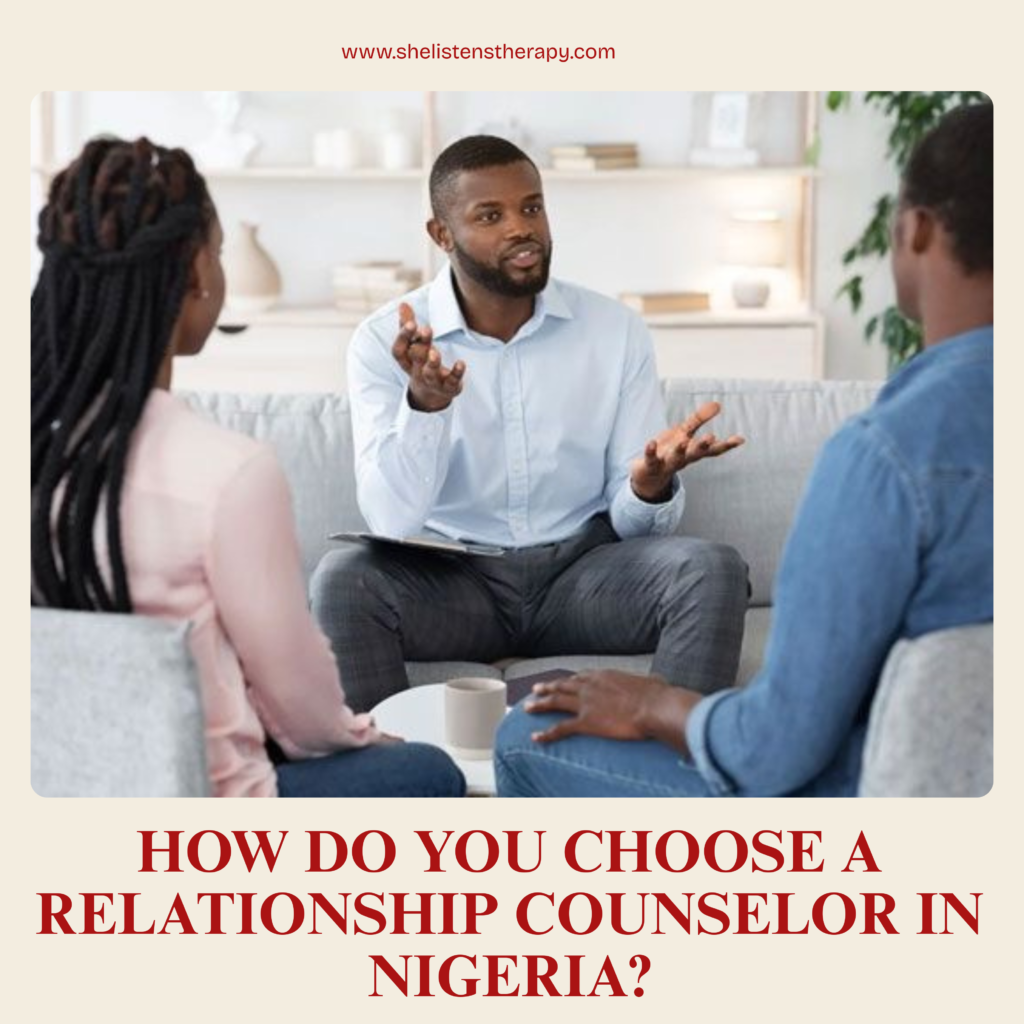
Choosing a relationship counsellor can feel like a big step. You may have spent months trying to fix things yourselves. Perhaps you are tired of the same argument returning, unsure whether your relationship can improve, or worried that speaking to someone outside the relationship will bring judgement.
Then comes the search. Counsellor, therapist, psychologist, marriage counsellor. Lagos, Abuja, Port Harcourt, online. Credentials, fees, referrals. It can be hard to know who is qualified, who will understand your situation and who will make you both feel safe enough to talk honestly.
The right counsellor will not decide whether you should stay together. Their role is to help you understand what is happening, communicate more clearly and consider your choices with care. A good fit matters, but you do not have to know everything before you begin. You can ask questions, take your time and change counsellors if the support is not right for you.
Here are six things to consider when choosing a relationship counsellor in Nigeria.
1. Check their training and professional background
Start by asking about the counsellor’s education, training and experience. Relationship counselling requires more than being a good listener or having personal experience with marriage. A practitioner should be able to explain what they studied, what kind of counselling training they completed and how they have prepared to work with couples.
You may come across counsellors, psychologists, psychotherapists, social workers and faith leaders who offer relationship support. Their qualifications and professional roles can differ. Ask what their title means, what training supports their work and whether they are a member of a relevant professional association.
In Nigeria, the Counselling Association of Nigeria, known as CASSON, describes membership categories for counselling professionals, including professional full membership and licensed membership. You can ask a counsellor which category they hold and how you can verify it with the association. Treat membership as one useful check, alongside their training, experience and approach. CASSON membership categories
Do not be afraid to ask direct questions. A trustworthy practitioner should be comfortable answering them without making you feel foolish for asking.
2. Look for experience with the issue you are facing
Not every relationship problem is the same. You may be dealing with repeated conflict, infidelity, family pressure, emotional distance, parenting disagreements, premarital concerns or the strain of a major life change. Some couples are also trying to decide whether they can rebuild trust or whether it is time to separate.
Ask whether the counsellor has experience supporting couples with concerns like yours. You do not need to share every private detail during your first enquiry. A broad description is enough to help you understand whether their experience is relevant.
You might ask:
- “Do you work with couples dealing with trust or communication problems?”
- “Have you supported couples facing family or cultural pressure?”
- “How do you work with couples who are unsure whether they want to stay together?”
A counsellor does not need to have lived through your exact situation to support you well. They do need to listen without assumptions and explain how they would approach your concerns.
3. Ask how sessions work, including confidentiality
Before booking, find out what to expect. Ask whether sessions are offered in person, online or both, how long they last, how often you might meet and what the fee is. If you are meeting online, check what platform is used and whether you can speak privately from a safe, uninterrupted place.
It is also reasonable to ask how confidentiality works. Counsellors should be able to explain how they protect your information, whether they keep notes and what the limits of confidentiality are. For example, a practitioner may have specific responsibilities if someone is at immediate risk of serious harm. Ask them to explain their policy in clear language before you begin.
If you are considering individual conversations as part of couples counselling, ask how information shared separately will be handled. You and your partner should understand the counsellor’s policy before either of you shares something you expect to remain private.
Clarity about these details can make it easier to focus on the work itself.
4. Choose someone who respects your values and context
Your relationship is shaped by more than the two of you. Family expectations, faith, culture, finances, parenting roles and community pressures may all affect what is happening. A helpful counsellor will be curious about those influences without stereotyping you or treating your background as the problem.
In an initial conversation, notice whether the counsellor asks thoughtful questions and listens to your answers. Do they respect both partners? Can they discuss faith or family influence without imposing their own beliefs? Do they make room for differences in gender roles, culture or personal values?
Feeling understood does not mean the counsellor must agree with everything you say. It means they take your experience seriously, help you examine it and avoid shaming you for who you are. You should not feel pressured to hide parts of your identity or beliefs to be treated fairly.
5. Notice whether you both feel safe enough to speak
The counsellor does not have to make every session comfortable. Difficult conversations can bring up sadness, anger or uncertainty. But you should feel that each person has space to speak, that the counsellor is listening fairly and that your concerns are not being dismissed or turned into a competition about who is right.
Pay attention after the first session. Did you feel heard? Did the counsellor explain the process? Could you raise a concern or ask a question? Did either of you feel pressured to agree to a particular outcome?
If one partner feels repeatedly blamed, silenced or judged, raise that with the counsellor. A good practitioner should be willing to hear feedback and explain how they will address it. If the pattern does not change, you can look for another counsellor. Choosing a different professional is not a failure. It is part of finding support that works for you.
6. Ask about their approach, fees and what progress may look like
There is no single method that suits every couple. Ask the counsellor to describe their approach in everyday language. What might happen during a session? Will you practise communication skills, explore recurring patterns, work on trust or set goals together? How will you review progress?
Be clear about the practical details too. Ask about fees, payment arrangements, cancellation policies and whether the counsellor offers a brief introductory call. If cost is a concern, say so. You can ask whether they offer different fee options or know of lower-cost services.
Progress does not always mean fewer disagreements right away. It may mean understanding the pattern behind your arguments, learning to pause before a conversation escalates, expressing needs more clearly or making a thoughtful decision about the future. Counselling should give you a clearer way to work on your concerns, not pressure you to remain together at any cost.
One important exception: if there is fear, coercion, threats or violence in the relationship, couples counselling may not be safe or suitable. Consider speaking privately with a specialist support service first. If you are in immediate danger in Nigeria, call 112. Lagos MiND also lists free, confidential support through its helpline and WhatsApp service. Check its current contact details directly before using them. Lagos MiND support and Nigeria emergency and mental health helplines.
Final thoughts
Choosing a relationship counsellor is not about finding someone who can magically remove every problem. It is about finding a trained, respectful professional who can help you understand what is happening and make room for honest conversation.
Ask about qualifications. Find out how they work. Notice how you feel in the room. Give yourself permission to ask questions before committing, and remember that you can seek a different counsellor if the fit does not feel right.
Seeking support does not mean your relationship has failed. It means something matters enough for you to give it attention. Whether you hope to rebuild closeness, understand a painful pattern or make a decision about what comes next, you deserve guidance that treats both your relationship and your individual wellbeing with care.
At Shelistens Therapy and Consulting, relationship counselling can offer a space to explore what is happening and consider your next steps. Visit shelistenstherapy.com or send a WhatsApp message to 0802 991 1256 to enquire about booking.